
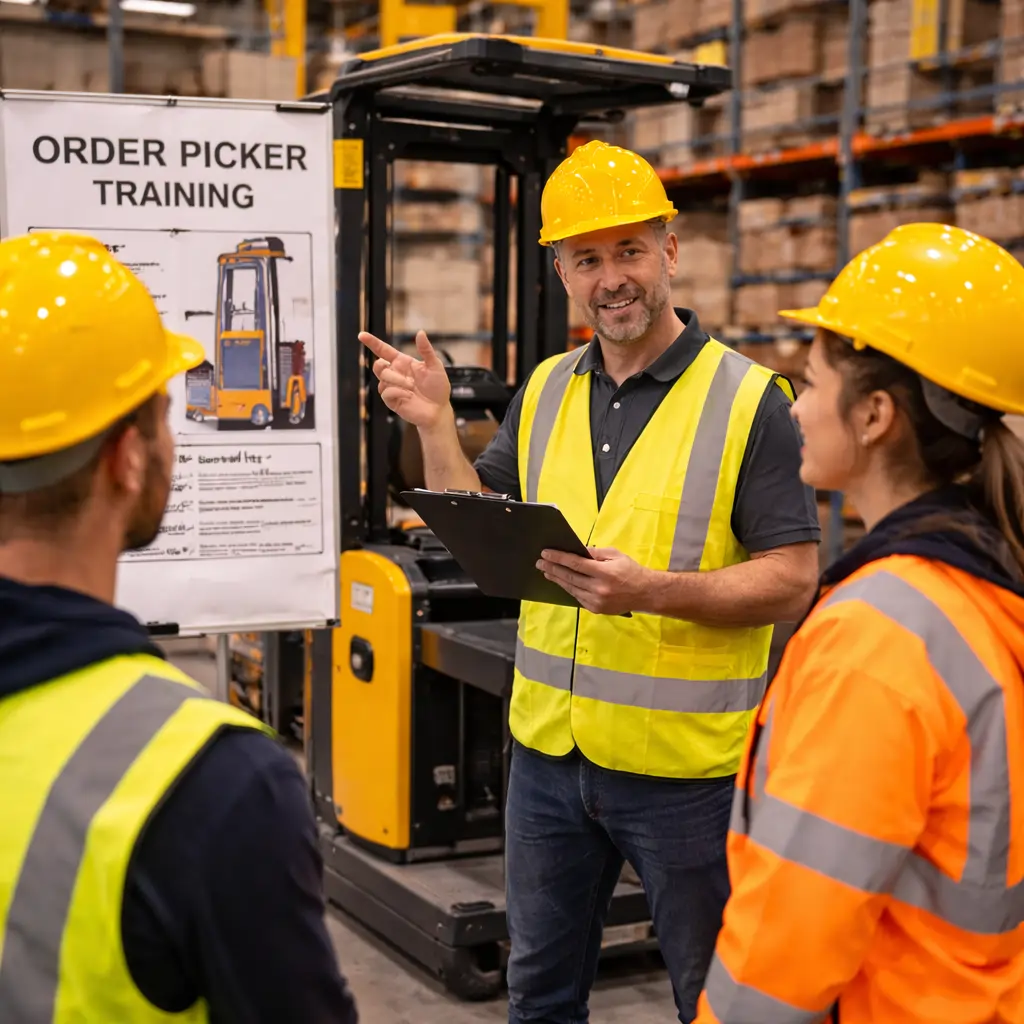
When it comes to order pickers, training people offsite doesn’t always make sense — especially when the real risks are sitting right there in your warehouse.
That’s why onsite order picker training is becoming the go-to option for a lot of businesses. It’s practical, relevant, and it deals with real hazards, not textbook ones.
Order Pickers Are High-Risk by Nature
Unlike forklifts, order pickers lift the operator up with the load. That means:
- Working at height
- Narrow aisles
- Racking on both sides
- Very little room for error
If something goes wrong, it goes wrong quickly. Onsite training allows those risks to be addressed properly, in the environment where they actually exist.
Why Onsite Training Works Better
Onsite order picker training uses:
- Your equipment
- Your racking layout
- Your traffic flow
- Your procedures
Instead of guessing how things might work, operators are trained on how things do work on your site.
That makes the training immediately relevant and far more effective.
Less Downtime, Less Disruption
Sending staff offsite usually means:
- Lost productivity
- Rostering headaches
- Travel time
- Extra costs
Onsite training reduces disruption by keeping staff where they already are. Training can often be staggered or scheduled around operations.
That’s a big win for employers.
Reinforcing Safe Habits Where They Matter
Bad habits often creep in when people get comfortable.
Onsite order picker training helps:
- Correct unsafe shortcuts
- Reinforce correct procedures
- Address site-specific blind spots
- Improve communication between operators
Because it’s done on the job, the lessons stick.
Compliance and Documentation Made Simple
From a compliance point of view, onsite training also helps with:
- Demonstrating due diligence
- Meeting WorkSafe expectations
- Supporting insurance requirements
- Creating a stronger safety culture
It’s proactive, not reactive.
Final Word From Paul
Order pickers are brilliant tools — but only when they’re used properly.
Onsite order picker training isn’t about slowing people down. It’s about making sure everyone understands the risks and knows how to manage them safely in their own workplace.
Safer staff, smoother operations, fewer headaches. That’s a good outcome for everyone.