
Night Shift Forklift Safety: What Operators Need to Know
Forklifts play a crucial role in keeping warehouses, construction sites, and logistics hubs moving—day and night. But operating a forklift during night shift hours comes with unique safety challenges that aren’t always present during daylight operations. Reduced visibility, fatigue, and insufficient lighting can all contribute to an increased risk of accidents if not properly managed.
Whether you’re a business owner managing 24-hour operations or a licensed operator working the night shift, understanding the specific requirements for night-time forklift safety is essential for staying compliant, reducing risk, and protecting your team.
Visibility: A Critical Factor at Night
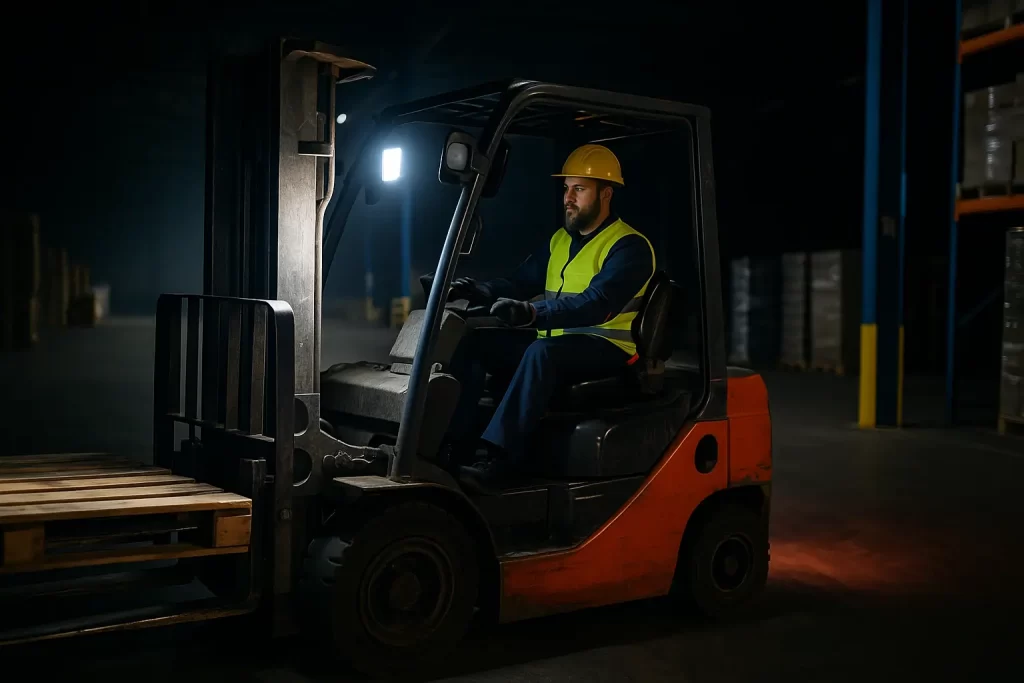
It goes without saying—limited visibility is one of the biggest safety concerns during night operations. Unlike daytime shifts where natural light supplements warehouse or site lighting, night shifts depend entirely on artificial sources.
According to Safe Work Australia and various state-based WHS regulators (e.g. WorkSafe Victoria, SafeWork NSW), all mobile plant, including forklifts, must be fitted with adequate lighting to ensure the operator can clearly see their path of travel and any hazards in the vicinity.
To enhance visibility:
- Forklifts should be equipped with front and rear working lights, especially when used outdoors or in poorly lit areas.
- Reflective floor markings, pedestrian exclusion zones, and safety signage should be highly visible under artificial lighting.
- Operators should wear high-visibility clothing that meets Australian Standards (AS/NZS 4602.1:2011). Retroflective stripes are recommended.
- Forklifts should have flashing lights, rotating beacons and horns & reverse beepers to help other workers detect their movement.
Visibility isn’t just about the operator seeing clearly—it’s also about ensuring others can see and hear the forklift as it operates.
Fatigue: The Silent Risk of Night Operations
Night shift work is closely associated with fatigue, which impairs concentration, reaction times, and decision-making. For forklift operators, even minor lapses in judgement can lead to serious incidents—especially when moving heavy loads or working in close proximity to other staff.
In line with Safe Work Australia’s Code of Practice for Managing the Risk of Fatigue, businesses must take reasonable steps to:
- Monitor hours of work and enforce adequate rest breaks
- Rotate tasks where possible to minimise monotony
- Provide a fatigue management plan or training to help workers identify warning signs
- Design shifts that allow enough time for quality sleep between rosters
Operators, in turn, must be honest about their fatigue levels and not operate a forklift if they feel drowsy, dizzy, or unable to concentrate.
Employers are encouraged to review rosters regularly to avoid excessive night shifts without adequate recovery time.
Lighting Regulations in Forklift Work Areas
Lighting in areas where forklifts operate is not just a best practice—it’s a WHS requirement. The lighting must be sufficient to allow operators to perform their tasks safely, which includes reading load data, navigating around obstacles, and spotting pedestrians.
While there is no “one size fits all” lux level for forklift operation in every setting, Safe Work Australia’s lighting guidelines recommend:
- 160 lux for general warehousing
- 240+ lux in areas where detailed load handling or paperwork is involved
- Higher levels if work involves particularly fine or hazardous tasks
If your workplace lighting doesn’t meet these standards, portable LED work lights, high bay lighting upgrades, and motion-sensor fixtures can improve visibility dramatically for night operations.
Don’t forget: it’s not only about brightness—but also light placement and consistency. Poorly positioned lights can cast shadows or cause glare, both of which reduce safety.
Night Shift Hazards: Other Considerations
Apart from visibility and fatigue, there are several other less obvious risks that employers and operators must consider on the night shift:
- Reduced supervision: Night shifts often have fewer supervisors or support staff. This means clear communication protocols and pre-shift safety briefings are vital.
- Emergency response delays: With fewer staff on-site, response times in the event of an incident can be slower. Ensure that night shift workers know emergency evacuation procedures, first aid points, and communication systems.
- Noise masking: Night-time use of fans, machinery, or white noise generators may make it harder for workers to hear reversing alarms or verbal cues. Consider additional audible and visual alerts.
Best Practices for Night Shift Forklift Operators
To work safely and efficiently on the night shift, forklift operators should:
- Complete a pre-operational check of lighting systems, horns, warning devices, and brakes
- Keep their vision sharp and surroundings well lit—especially when turning corners or reversing
- Take regular micro-breaks to stay alert and hydrated
- Maintain clear communication with colleagues and supervisors via two-way radios or signalling systems
- Report any visibility issues, fatigue, or equipment problems immediately
Training for forklift operators should also cover night-specific scenarios, and businesses should review their Safe Work Method Statements (SWMS) to ensure they reflect night shift conditions.
Conclusion: Safety Doesn’t Sleep
Night shift operations are a reality for many Australian workplaces. But with proper lighting, structured fatigue management, and equipment that meets safety standards, forklift operations can remain just as safe after dark as they are during the day.
Employers must ensure that work environments are well lit, operators are properly supported, and WHS obligations are upheld around the clock. Operators, in turn, must take extra precautions to remain alert, visible, and compliant at all times.
Remember: When visibility is reduced and fatigue increases, the margin for error becomes much smaller. Staying safe during the night shift requires a proactive approach—and a team committed to doing the job right, no matter the hour.