

Jet skiing is one of the most exhilarating ways to enjoy Australia’s beautiful waterways. But with that power and speed comes responsibility—especially when operating near swimmers and divers.
Whether you’re heading out for a solo blast or towing a tube, it’s essential to understand the rules, etiquette, and safety requirements when sharing the water with others. In this article, we’ll explain the legal separation distances, visibility markers, and good practice behaviours to keep everyone safe.
Minimum Distance Rules: How Close Is Too Close?
Each state and territory in Australia sets rules about how close Personal Watercraft (PWCs), like jet skis, can come to swimmers, divers, and shorelines. These rules are in place to prevent collisions, wake injuries, and panic incidents.
General guidelines (check local laws for specifics):
- Keep at least 50 metres away from:
- Swimmers in the water
- Other vessels
- Dive flags or buoys
- The shoreline, jetties, and pontoons
- If operating at more than 6 knots (approx. 11 km/h), you must remain at least 200 metres from designated swimming areas or flagged beaches.
Exceptions may apply when:
- Navigating through designated access lanes
- Launching or beaching at low speed (below 6 knots)
Tip: Always observe posted signage at boat ramps, beaches, and waterways—many areas have stricter local rules.
Understanding Dive Flags and Markers
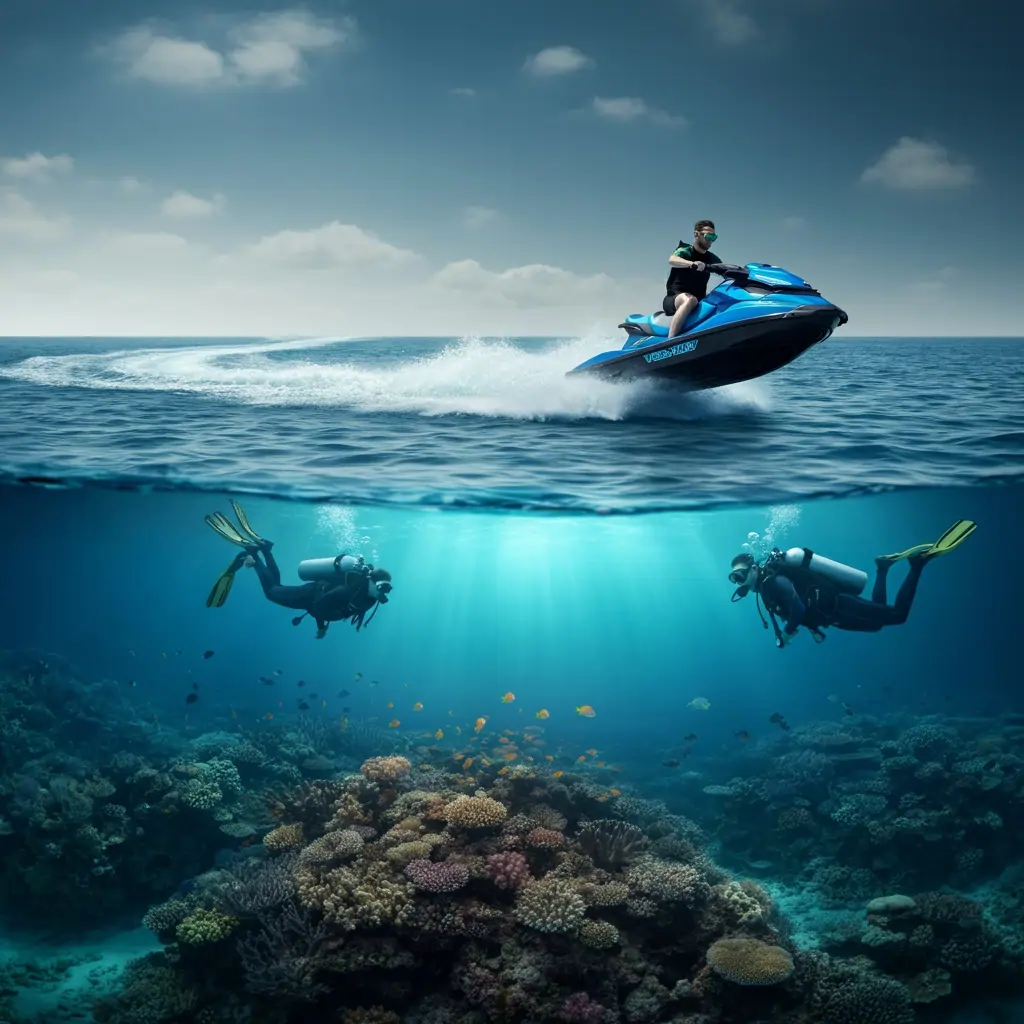
Divers use flags or buoys to indicate their presence underwater. These are vital safety markers and legally enforceable warnings for PWC users to keep their distance.
Common diver signals:
- Alpha Flag (Blue and White): International signal indicating a diver below—must keep clear.
- Red and White Diver Down Flag: Often used in Australia on small vessels or floats to indicate divers in the water.
Your responsibility as a jet ski operator:
- Stay at least 50 metres away from dive flags
- Slow to 6 knots or less when operating near diving areas
- Keep a watchful eye—divers may surface unexpectedly
Designated Swimming Zones: Strictly Off-Limits
Most popular beaches and inland swim areas have designated zones marked by red and yellow flags, swim-only buoys, or signage. It is illegal to operate a jet ski in these zones—even at idle speed.
Doing so can result in:
- Heavy fines
- Loss of your PWC licence
- Public complaints or official reports
Use designated PWC zones or access lanes to enter and exit the water safely and legally.
Best Practice Etiquette Near Swimmers and Divers
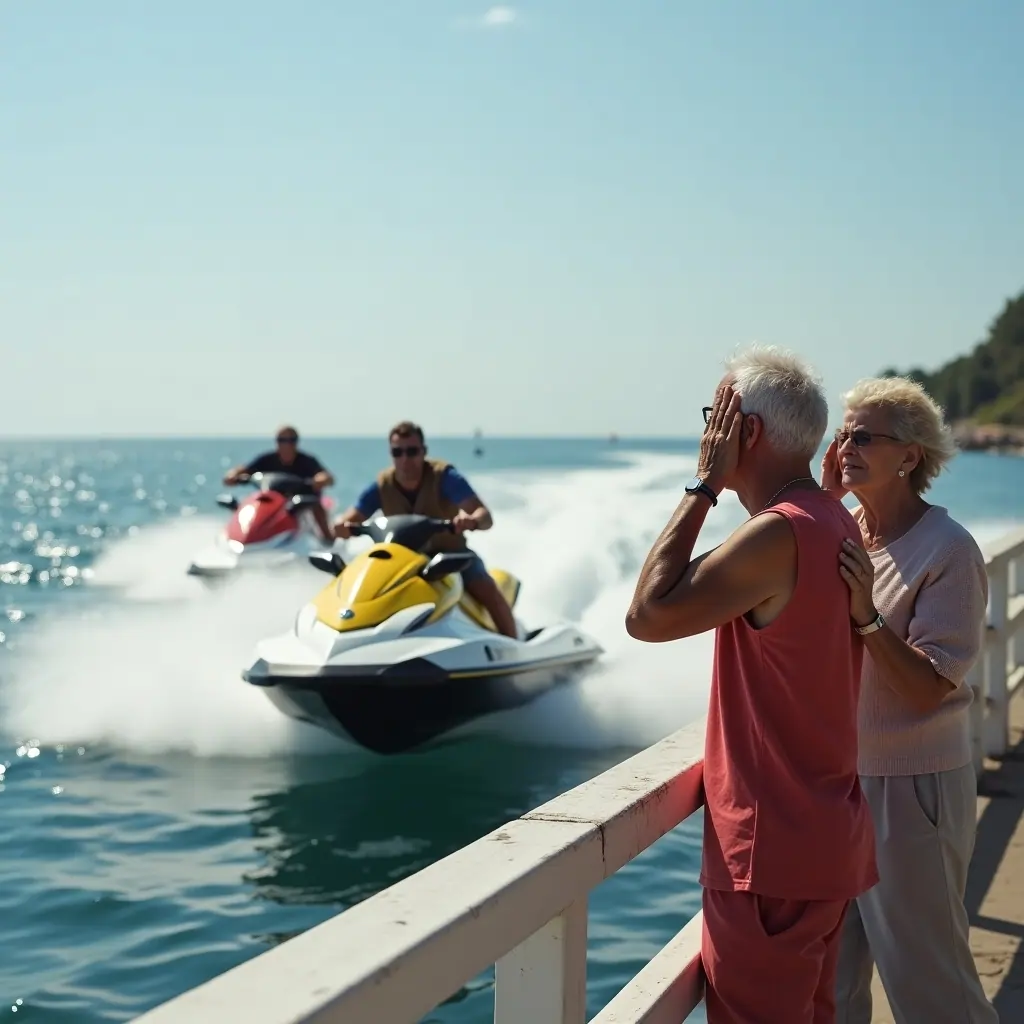
Even when you’re following the rules, remember that swimmers and divers may still feel uneasy around fast-moving watercraft. To help build safer, more respectful waterways:
- Give wide berth wherever possible—even more than the legal minimum
- Reduce speed and trim your wake near busy areas
- Avoid sudden throttle bursts near the shore or floating swimmers
- Keep your observer alert if towing
- Avoid zigzagging or weaving through groups of people
What If You’re the One in the Water?
If you’re swimming, snorkelling, or diving, your safety also depends on visibility.
Be sure to:
- Stay within designated swim areas
- Use a brightly coloured swim float or marker when outside swim zones
- Avoid diving or swimming near boat ramps, marinas, or access lanes
This not only keeps you safe but helps operators see and avoid you.
Legal Consequences for Breaches
Breaching distance rules near swimmers and divers is considered a serious marine offence. Penalties may include:
- Fines ranging from $250 to $500+ depending on the state
- Demerit points or licence suspension
- Seizure of the jet ski in extreme or repeat cases
- Increased insurance premiums or denied claims if involved in an incident
Conclusion: Share the Water, Respect the Space
Jet skiing is all about freedom and fun—but when that fun happens in shared waters, it must be balanced with safety and respect. Keeping the right distance from swimmers and divers isn’t just the law—it’s part of responsible boating.
By knowing the rules, observing signs and markers, and riding with awareness, you can help make the waterways safer for everyone.