
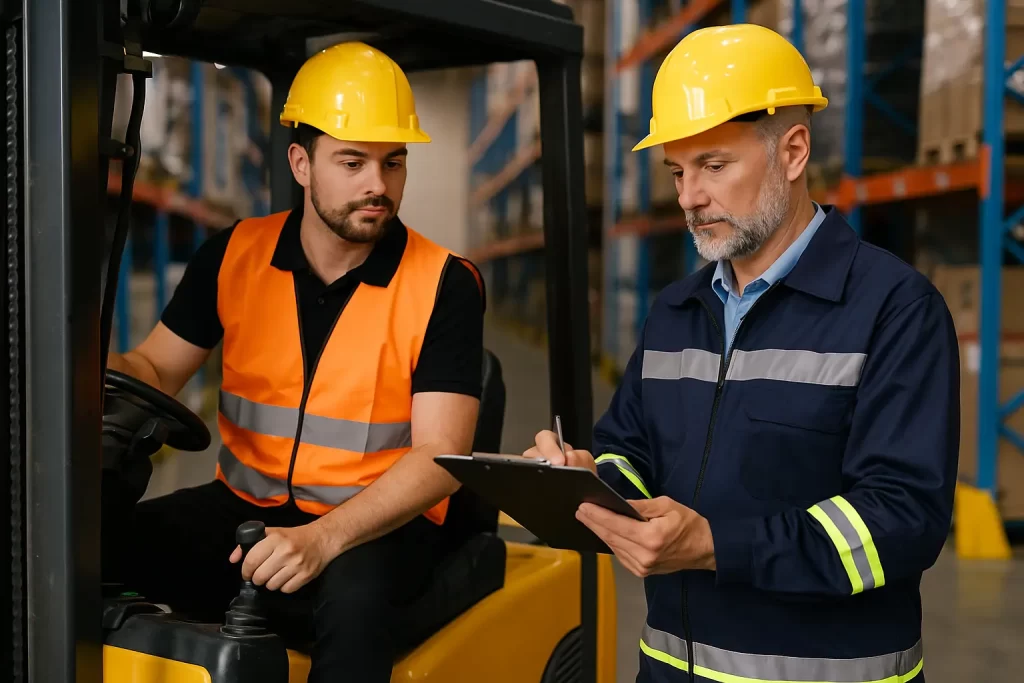
Forklift Training Audits: What Happens When Your Workplace Is Inspected?
Forklifts are essential in many Australian industries—from warehousing and logistics to construction and manufacturing. But with their heavy loads and constant movement, forklifts are also a high-risk work activity. That’s why WorkSafe inspectors across Australia regularly conduct workplace audits to ensure businesses are complying with health and safety obligations, especially when it comes to forklift operations.
If you’re an employer, manager, or safety officer, understanding what to expect during a forklift training audit can make the difference between smooth compliance and costly enforcement action.
Let’s take a behind-the-scenes look at what happens when your workplace is inspected—and how you can be prepared.
Why Are Forklift Training Audits Conducted?
Forklift-related incidents remain one of the most common causes of serious injury and death in Australian workplaces. Audits and inspections are part of WorkSafe’s proactive efforts to:
- Reduce forklift-related injuries
- Improve workplace safety culture
- Ensure compliance with Work Health and Safety (WHS) Regulations
- Prevent incidents before they happen
An audit may be random, incident-triggered, or part of a targeted safety campaign in your industry or region.
Who Conducts the Audit?
Each Australian state and territory has its own workplace safety regulator, such as:
- WorkSafe Victoria
- SafeWork NSW
- WorkSafe Queensland
- SafeWork SA, etc.
Inspectors from these agencies are authorised under their respective WHS Acts to enter workplaces, request documents, and interview staff.
They can arrive unannounced or by appointment depending on the purpose of the audit.
What Will Inspectors Check?
During a forklift training audit, inspectors focus on both documentation and practical application. Here’s what they typically review:
✅ High Risk Work Licences (HRWL)
The inspector will verify that all forklift operators:
- Hold a current and valid LF or LO class HRWL
- Are operating within the scope of their licence
- Have completed training through a Registered Training Organisation (RTO)
- Are 18 years or older (the legal minimum age)
You’ll need to produce physical or digital copies of licence records.
✅ Training Records & Refresher Training
WorkSafe requires that all operators be properly trained and competent. Inspectors may request:
- Initial training certificates
- Records of refresher training (especially after incidents or equipment upgrades)
- Evidence of site-specific induction or toolbox talks
Even licenced operators need ongoing training, particularly if using attachments, operating on rough terrain, or transitioning between warehouse and outdoor environments.
✅ Safe Work Method Statements (SWMS) & Risk Assessments
Inspectors will check if your business has:
- A documented SWMS for forklift operation
- Regularly updated risk assessments for traffic management, pedestrian interaction, load handling, and environmental hazards
- Procedures for reporting near-misses or incidents
These documents show that your business is proactively managing risk, not just ticking boxes.
✅ Traffic Management Plans
If forklifts operate near pedestrians, inspectors will assess whether you’ve implemented a traffic management plan, which may include:
- Marked exclusion zones
- Signage and floor markings
- Use of spotters or mirrors
- One-way paths or speed limits
Failure to separate forklift and pedestrian traffic is one of the most common hazards flagged during audits.
✅ Pre-Start Checks and Maintenance Logs
Forklifts must be inspected daily or before each shift, with any faults reported and resolved. Inspectors will look for:
- Completed pre-start checklists
- Service history and logbooks
- Documented repairs or part replacements
This ensures that the forklift is safe to use and has been properly maintained in line with manufacturer recommendations.
✅ Operator Observation
WorkSafe inspectors may observe forklift operators in action to check for:
- Safe driving practices (e.g. forks lowered while driving, observing speed limits)
- Use of seat belts and safety equipment
- Awareness of surroundings and signage
- Proper load handling and stacking
Unsafe behaviours or shortcuts will be flagged—and may trigger further investigation or retraining requirements.
What Happens After the Audit?
At the end of the visit, the inspector will usually provide:
- Verbal feedback
- A written report outlining any compliance issues
- Notices if applicable (e.g. improvement or prohibition notices)
If your workplace is found to be non-compliant, you’ll be given a timeframe to correct the issues. In serious cases—such as allowing unlicenced operators or using faulty equipment—fines or legal action may follow.
How to Prepare for a Forklift Training Audit
To stay audit-ready, businesses should:
- Keep HRWL records and training certificates updated and accessible
- Ensure all operators undergo refresher training regularly
- Conduct and document pre-start inspections
- Update SWMS and traffic management plans as your site evolves
- Encourage a safety culture where workers feel empowered to report issues
Regular internal safety audits are a great way to identify risks and gaps before a formal inspection occurs.
Conclusion: Stay Ready, Stay Safe
A forklift training audit isn’t something to fear—it’s an opportunity to make sure your workplace is safe, compliant, and protecting its people. By understanding what inspectors look for and proactively managing your training and safety documentation, you can approach any audit with confidence.
Remember: in high-risk work environments, preparedness is prevention. Get the right licences, maintain the right records, and foster a safety-first mindset across your entire team.