
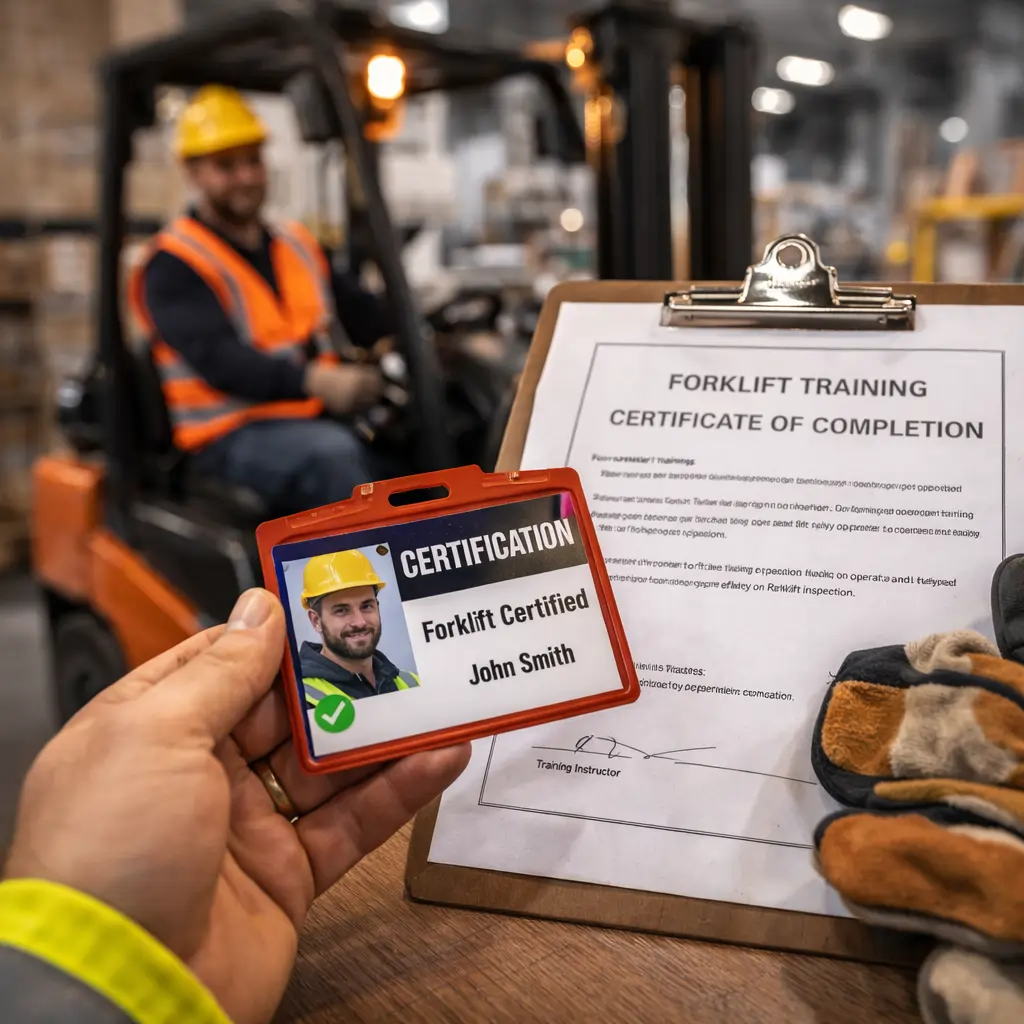
“Am I forklift certified?”
I get asked that question all the time, and the truth is, forklift certification is one of the most misunderstood terms in the industry.
Some people think it’s a separate ticket.
Others think once you’ve got it, you’re covered for life.
And some reckon it’s just a fancy word for a licence.
So let’s clear it up properly.
What Forklift Certification Actually Means
In simple terms, forklift certification means you’ve been:
- Trained
- Assessed
- Deemed competent to operate a forklift safely
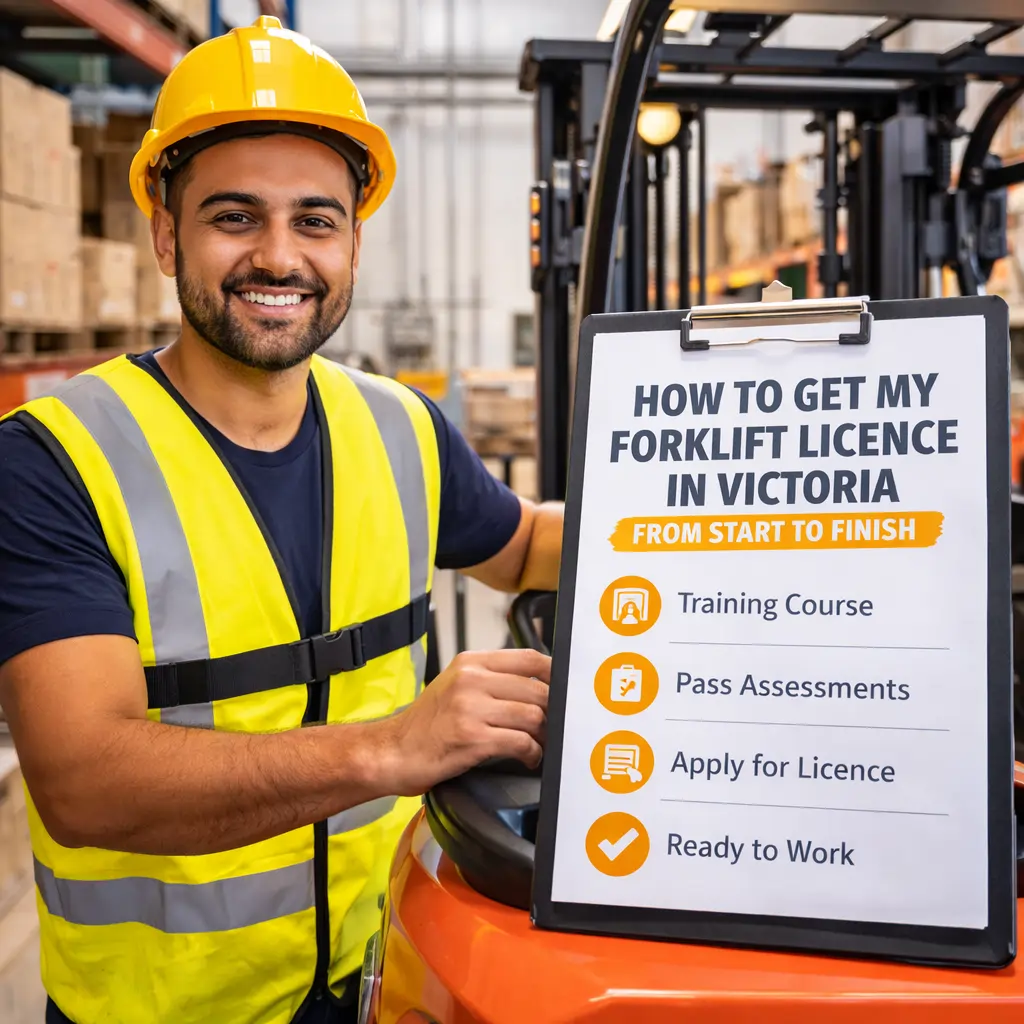
In Australia, that competency is recognised through a High Risk Work Licence, issued after you pass an approved assessment.
So when people talk about being “certified”, they’re usually referring to having completed forklift training and assessment to the required standard.
Certification vs Licence: What’s the Difference?
Here’s the straight version:
- Training & assessment → proves you’re competent
- Licence → the legal permission to operate
Forklift certification is the process that leads to the licence. One doesn’t work without the other.
You can’t just say you’re certified — you need to have gone through proper training and assessment.
Why Forklift Certification Matters on the Job
Most employers won’t even look at your résumé unless you’re certified.
That’s because certification shows:
- You understand forklift safety
- You can operate the machine correctly
- You know how to work around people and loads
From an employer’s point of view, it reduces risk — and risk costs money.
Certification Isn’t Just a One-Time Thing
Here’s something people don’t always realise.
Even if you’re certified and licensed, employers can still require:
- Refresher training
- Site-specific induction
- Proof of recent experience
Certification shows you’ve met the standard — staying safe on the job means keeping those skills sharp.
Why “Unlicensed Experience” Doesn’t Count
I hear this one a lot:
“I’ve been driving forklifts for years.”
That might be true — but without proper certification, it doesn’t hold up legally.
If something goes wrong and you’re not certified:
- Insurance can be void
- Employers can be fined
- You can be held personally responsible
Certification protects everyone involved.
What Proper Forklift Certification Should Include
Good certification training covers:
- Safe operation
- Load handling
- Stability and balance
- Working around pedestrians
- Real-world scenarios, not just theory
If training feels rushed or box-ticking, it’s probably not doing its job.
Final Word From Paul
Forklift certification isn’t about paperwork — it’s about proving you can operate safely in the real world.
If you’re going to be responsible for a machine that can seriously hurt people, proper certification matters. It protects you, your employer, and everyone else on site.
Do it properly, and you’ll never have to worry about being questioned on the job.