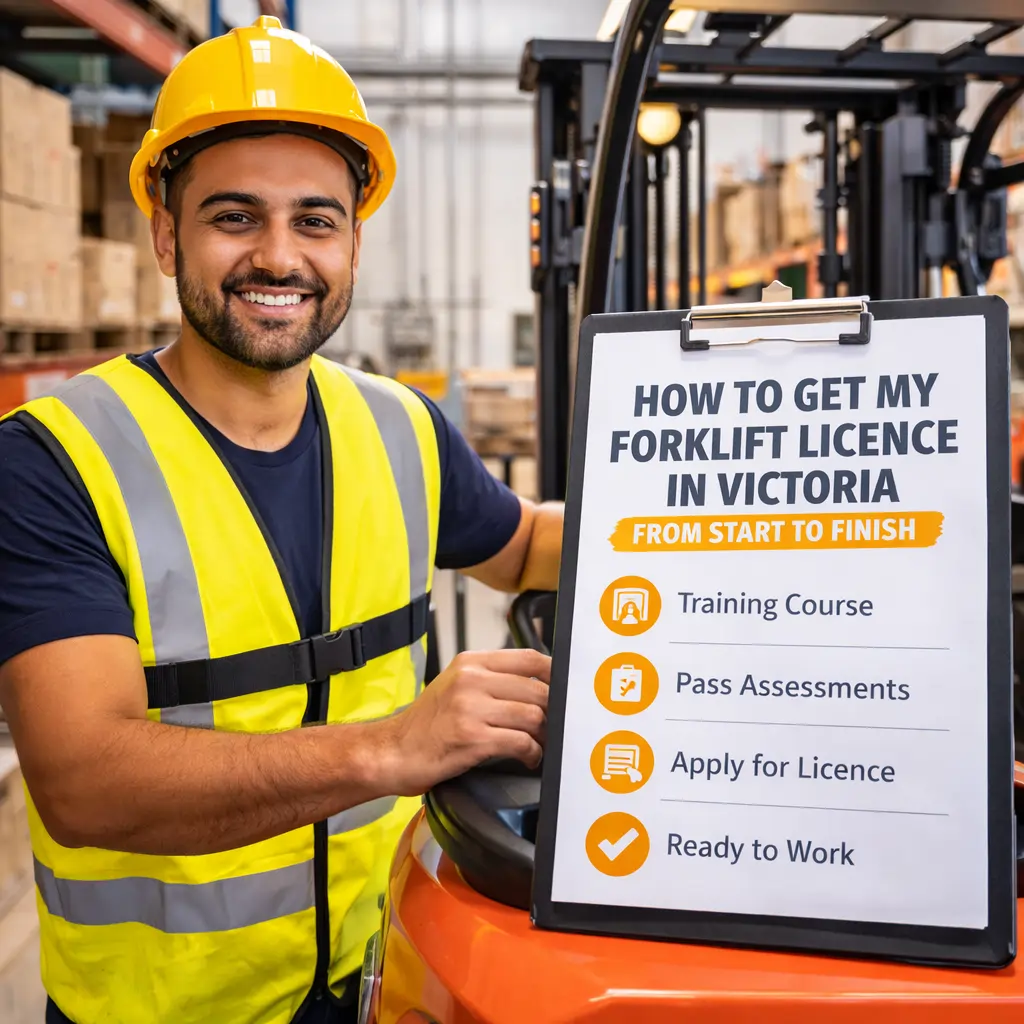

If you’ve never done forklift training before, you’re probably wondering what you’re actually signing up for.
Is it all paperwork?
Is it blokes reading off slides?
Or is it just someone ticking boxes so you can get a licence?
I’ll be straight with you — good forklift training isn’t about memorising rules, it’s about learning how to operate a forklift safely, confidently, and the way it’s actually used on real worksites.
I’ve been doing this a long time, and here’s what forklift training really teaches you.
Forklift Training Starts With the Basics (For a Reason)
Every course starts with the fundamentals, and there’s no way around it.
You’ll cover things like:
- How forklifts stay balanced
- Why load centres matter
- What happens when you overload or lift too high
- How tipping actually occurs (and yes, it happens fast)
This isn’t theory for theory’s sake.
Most forklift accidents happen because someone thought they knew better.
You’ll Spend More Time on the Forklift Than in a Chair
This is where proper forklift training separates itself from cheap, rushed courses.
You’ll be:
- Getting on and off the machine correctly
- Driving forward and in reverse
- Turning in tight spaces
- Stacking, unstacking and manoeuvring loads
- Learning how different loads behave once they’re off the ground
Forklifts don’t handle like cars, and you only learn that by actually driving one.
Safety Isn’t Just Rules — It’s Habits
Most people think safety training is just:
“Do this, don’t do that.”
In reality, forklift training is about building safe habits so you don’t have to think about them every time.
You’ll learn:
- Where to look before you move
- How to position yourself around pedestrians
- When to stop a lift, even if it’s “almost right”
- Why rushing is the biggest risk on any site
These habits are what employers look for, even if they don’t say it outright.
Real-World Scenarios Matter
Good forklift training doesn’t pretend every site is flat, wide and perfect.
You’ll deal with:
- Tight warehouse aisles
- Uneven surfaces
- Limited visibility
- Shared spaces with other workers
Because that’s what the real world looks like.
The Assessment Isn’t a Trick
A lot of people stress about the assessment.
You shouldn’t — if you’ve paid attention and put the time in.
You’re assessed on:
- Safe operation
- Load handling
- Observation and awareness
- Following procedures
No one’s trying to catch you out. The goal is to make sure you’re safe to operate a forklift on an actual job.
Forklift Training Is About Confidence, Not Just a Licence
Yes, the licence matters.
But what matters more is walking onto a site knowing:
- You can operate safely
- You won’t panic under pressure
- You won’t be the bloke everyone’s watching nervously
That confidence only comes from proper forklift training, not shortcuts.
Final Word From Paul
I’ve trained people from every background — tradies, warehouse workers, career starters, and blokes changing direction later in life.
The ones who do best aren’t always the strongest or fastest.
They’re the ones who respect the machine and take the training seriously.
If you’re going to do forklift training, do it properly.
Your safety — and everyone else’s — depends on it.