
Essential Boat Safety Gear You’re Probably Forgetting
Every boat licence holder in Australia knows the basics—lifejackets, flares, fire extinguishers. But when it comes to real-world boating safety, there’s a whole category of gear that’s often overlooked until it’s too late.
From breakdowns and sudden weather changes to groundings or injuries, having the right safety equipment on board can be the difference between a minor inconvenience and a life-threatening emergency.
In this article, we look beyond the bare minimum and explore the essential boat safety gear you’re probably forgetting—and why each item matters.
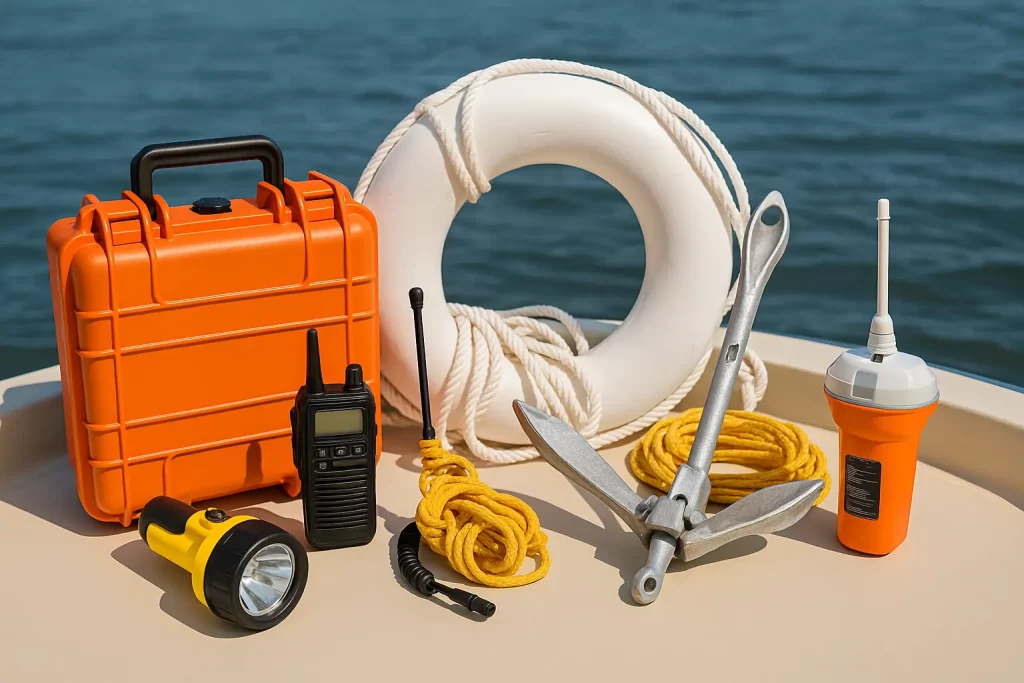
EPIRBs and PLBs: Your Lifeline in Remote Waters
EPIRB stands for Emergency Position Indicating Radio Beacon. In Australia, it’s mandatory to carry a 406 MHz GPS-enabled EPIRB if you’re venturing more than 2 nautical miles offshore.
But even if you’re boating inshore, having either an EPIRB or a PLB (Personal Locator Beacon) is a smart move—especially in remote or low-traffic areas where mobile coverage is limited.
When activated, these beacons send your GPS coordinates to emergency services via satellite, increasing your chance of being rescued quickly.
🔹 Pro tip: Register your EPIRB with AMSA (Australian Maritime Safety Authority) and test it annually.
A Properly Sized Anchor (and Enough Line)
An anchor isn’t just for mooring or fishing breaks—it’s a critical safety tool when:
- Your engine fails
- You’re drifting into danger
- You’re caught in rough conditions
Make sure your anchor is:
- Correctly sized for your boat and conditions
- Fitted with sufficient anchor line or chain—generally 3 to 5 times the depth of water
- Easily accessible and ready to deploy quickly
It’s also wise to carry a spare anchor if you travel in areas with rocky or weedy seabeds.
Manual and Electric Bilge Pumps
Water can get into your boat in many ways—wave splash, rain, hull leaks, or engine trouble. A bilge pump helps you stay afloat when it does.
Most boats should have:
- An automatic electric bilge pump with a float switch
- A manual bilge pump as backup
- A bucket or bailer for smaller vessels
Remember, your pump is only useful if it’s maintained and the outlet is not blocked. Check regularly, especially before long trips.
First Aid Kit (A Real One, Not a Half-Empty Box)
Cuts, fishhooks, sunburn, dehydration—these things happen often while boating. A marine-rated first aid kit is designed to withstand wet conditions and should include:
- Bandages and antiseptics
- Seasickness tablets
- Sting relief cream
- CPR instructions
- Burn gel and emergency blanket
Check your kit every few months and replace expired items.
Torch or Spotlight (With Spare Batteries)
Once the sun goes down or if fog rolls in, visibility can drop fast. A waterproof bouyany LED torch or spotlight is invaluable for:
- Navigating at night
- Finding gear
- Signalling other boats or rescuers
Pack spare batteries or opt for a rechargeable light with solar backup.
Marine Radio (VHF or 27 MHz)
While mobile phones are useful, they aren’t a substitute for a dedicated marine radio, especially when out of range. A VHF radio allows you to:
- Contact other boats
- Monitor weather alerts
- Call for help on Channel 16 (the emergency frequency)
Handheld VHF radios are great for smaller vessels, but fixed units with antennae have longer range.
Bailing Equipment (Even on Bigger Boats)
It may sound basic, but many boating incidents start with water slowly accumulating in the hull. Having a bailer—such as a scoop or bucket—is required on many vessels under safety legislation.
Even if you have a bilge pump, manual bailing gear is crucial in case of power failure.
Spare Fuel and Tools
Running out of fuel is one of the most common causes of marine rescue callouts. Always carry:
- A spare jerry can of fuel (secured and vented properly)
- Basic tools: spanners, screwdrivers, hose clamps, duct tape
- Spare spark plugs, fuel line, and filters (for outboard users)
Extra Drinking Water and Emergency Rations
Whether it’s a long day fishing or an unexpected delay due to breakdown or weather, having extra potable water and a few non-perishable snacks onboard is wise.
This is especially important in summer and in regional areas where rescue times may be longer.
Navigation Tools and Waterproof Maps
Even in the GPS age, every skipper should carry:
- A waterproof marine chart of their local area
- A compass
- A spare GPS or phone app with offline capability
These tools help you find your way home if electronics fail or you venture into unfamiliar areas.
Conclusion: Preparedness Isn’t Paranoia—it’s Seamanship
Safe boating is about more than just lifejackets and ticking boxes. The best skippers are those who plan ahead, prepare for the unexpected, and understand that conditions can change at any time.
By adding the gear above to your checklist—and keeping it maintained—you’ll not only meet your legal obligations but also protect your passengers, your vessel, and yourself.
Because once you’re out on the water, you’re on your own until help arrives—and what you have onboard can make all the difference.