

How to Prepare for a Marine Licence Practical in Regional Areas
Living in regional Australia has its perks—peaceful landscapes, open waters, and less congestion. But when it comes to getting your marine licence, regional learners often face a unique set of challenges.
Whether it’s limited access to approved training waters, fewer test centres, or infrequent course availability, getting your marine licence outside a capital city requires a bit more planning and resourcefulness.
Understanding the Marine Licence Practical
In Victoria, obtaining a marine licence involves:
- Completing a theory component (online or in person)
- Submitting identification and documentation at Vic Roads
Challenges for Regional Learners
Some of the common difficulties faced in rural areas include:
- Limited access to RTOs (Registered Training Organisations) offering marine licence assessments
- Lack of local test centres—you may need to travel to a larger town or coastal area
- Infrequent course dates, making scheduling more difficult around work and school
Despite these hurdles, regional learners regularly succeed by planning ahead and making use of available resources.
Tips to Help You Prepare
Here’s how to make sure you’re ready to pass your marine licence —even if you’re based far from the coast:
- Choose a Mobile or Flexible RTO
Many marine safety trainers travel between regional locations on a rotating schedule, delivering courses in rural towns.
- Look for RTOs that specialise in regional delivery
- Ask if they offer group bookings—this can bring the course to your town if there’s demand
Some RTOs also partner with local councils or boating clubs to offer pop-up training events.
- Study the Theory in Advance
Before your practical, you’ll need to understand key theory topics like:
- Navigation lights
- Buoys and markers
- Marine radio procedures
- Safety equipment requirements
- Speed zones and wash rules
- Collision avoidance and right-of-way rules
Complete the theory online well in advance of your practical to avoid last-minute stress. Most states, like Victoria and Queensland, offer free prep materials and online quizzes.
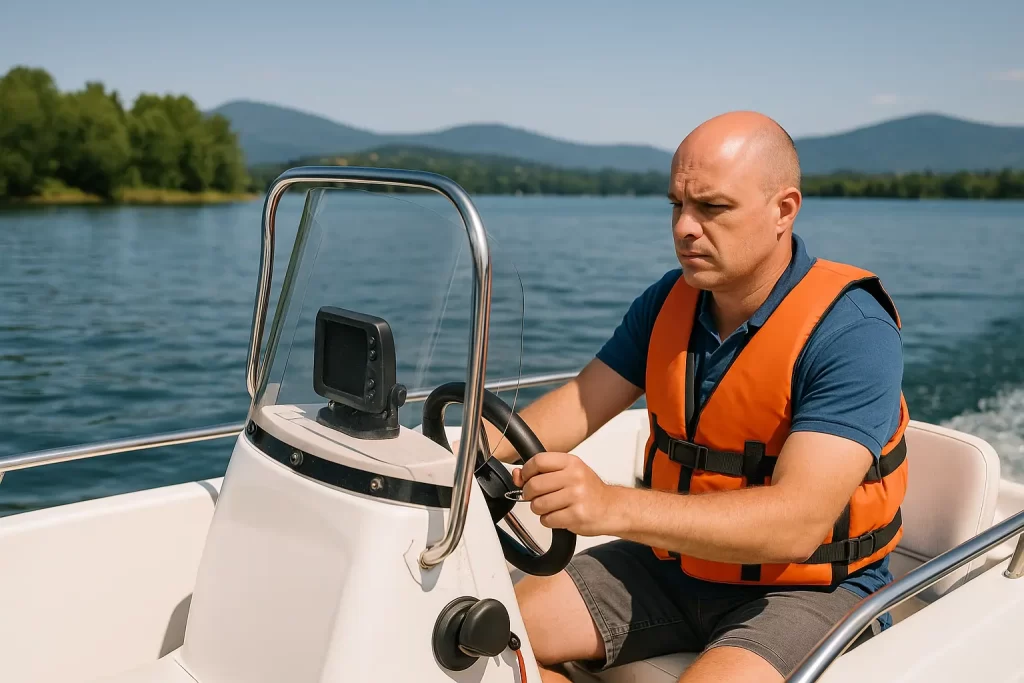
- Practise Handling a Boat (If Possible)
If you have access to a boat (even through a family member or local club), get familiar with the following under supervision by a licenced operator …..
- Starting and stopping the engine
- Steering at low and moderate speeds
- Turning in tight spaces
- Manoeuvring around buoys or markers
- Approaching a jetty or ramp
Don’t worry if you don’t own a boat—your RTO will provide a compliant vessel for the test. But any hands-on time helps.
- Understand Local Water Conditions
Regional waterways can vary greatly in terms of:
- Depth and tides
- Wind exposure and weather conditions
- Ramp access and currents
- Flood damage or weed overgrowth
Check with your assessor if the practical location is subject to seasonal limitations—this can impact test availability or change assessment locations.
- Know the Safety Equipment
During your practical, you’ll be expected to:
- Identify and correctly stow lifejackets
- Use a kill switch lanyard
- Check for bailing equipment, anchor, fire extinguisher, and distress signalling devices
- Complete a pre-departure safety check
If you’re unfamiliar with any of this gear, ask your trainer for a briefing before the test begins.
- Be Prepared to Travel
In many regional areas, the nearest approved test centre may be 1–3 hours away. Plan your travel early:
- Book accommodation if needed
- Check weather forecasts—tests may be postponed for safety
- Bring photo ID, completed theory proof, and any required paperwork
Make a day of it—many people combine the test with shopping or a local outing to make the most of the trip.
Where to Find Regional Marine Licence Courses
Check with:
- Local boating clubs or angling associations
- Community learning centres or TAFE campuses
- State marine safety websites, such as Maritime Safety Victoria or Transport for NSW
- Your local council—some host seasonal boating safety programs
- Google search
Conclusion: Distance Shouldn’t Be a Barrier
Earning your marine licence in regional Australia may take a little extra effort, but it’s absolutely achievable. With early planning, access to mobile trainers, and a solid understanding of theory and practical skills, you’ll be ready to pass your test and hit the water confidently.
Remember, safety and knowledge are just as important as passing the test—especially when boating in remote areas where help may be further away.
So start preparing today—and enjoy everything regional waterways have to offer, the safe and legal way.