

Night Boating Rules in Australia: What Every Licence Holder Should Know
There’s something magical about being on the water after dark—cooler air, quiet surroundings, and the sparkle of lights on the water. But night-time boating also brings heightened risks, from reduced visibility to an increased chance of collisions or navigational errors.
If you’re a marine licence holder planning a night boating trip in Australia, it’s vital to understand the specific rules and safety obligations that apply after sunset. In this article, we’ll break down the key navigation light requirements, speed restrictions, and visibility laws every boater needs to follow.
Is Night Boating Legal in Australia?
Yes, recreational boating at night is legal in most Australian states and territories—but it comes with stricter safety and navigation requirements. Boaters must ensure they are not only licenced but also familiar with their local marine authority’s guidelines for operating vessels at night.
The legal definition of “night” generally refers to the period between sunset and sunrise—when natural light is insufficient for safe navigation.
Navigation Light Requirements
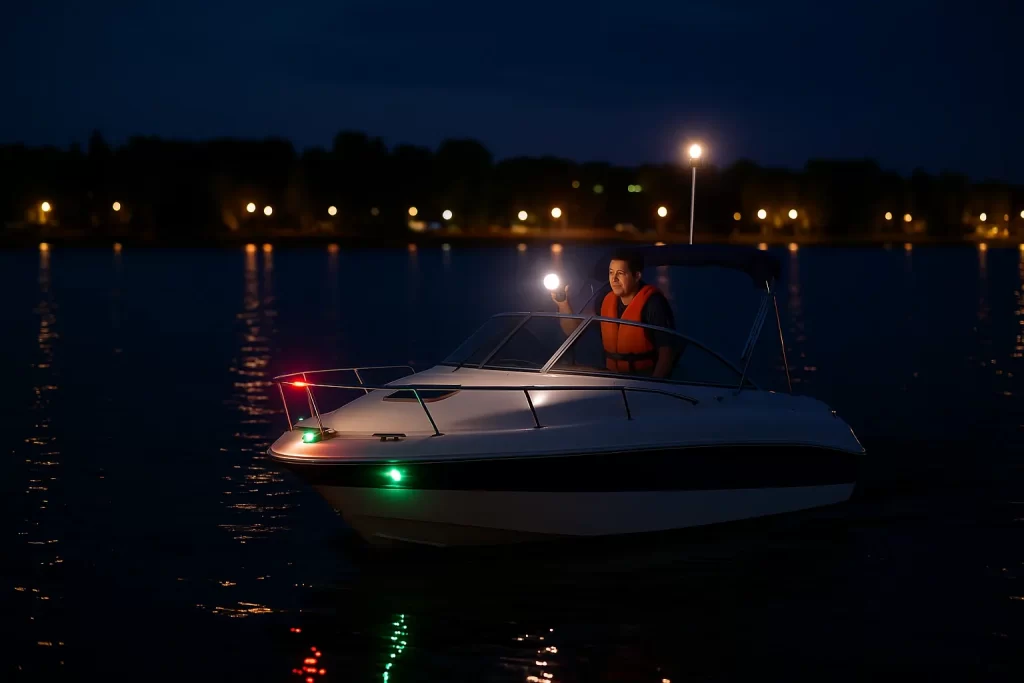
By law, any vessel operating at night (or in reduced visibility) must display the correct navigation lights. These lights allow other vessels to understand your direction, status, and movement, which helps avoid collisions.
Minimum Required Lights:
For most small recreational vessels (under 12 metres), you’ll need:
- Sidelights (port and starboard): Red on the left (port), green on the right (starboard)
- All-round white light (or a stern + masthead combo): visible from all angles (Normally placed on a cabin, windshield or pole)
- Anchor light (if anchored at night): All-round white light
These lights must be mounted correctly, visible from the correct angles, and be bright enough to be seen from at least 2 nautical miles (3.7 kms) in open waters.
Jet skis (PWC) are typically not permitted to operate at night in most states—if they are, they must comply with lighting requirements, which can be difficult given their design.
Victorian Navigation Light Regulations (Quick Overview)
- NSW: Murray River – Navigation lights must comply with the International Regulations for Preventing Collisions at Sea (COLREGs).
- VIC: Marine Safety Victoria enforces strict requirements for light placement and visibility distance.
Night-Time Speed Limits and Safe Speed Principles
Unlike daytime boating, speed limits at night are governed more by “safe speed” principles rather than fixed limits—although speed signs and zones must still be obeyed.
Key considerations:
- A safe speed is one where you can stop or avoid a collision within a safe distance.
- At night, this means reducing speed significantly due to poor visibility and delayed reaction time.
- Planing hulls should operate at displacement speeds when visibility is low.
- Always allow extra time for turning, especially near moorings, jetties, or other vessels.
Some waterways have specific reduced speed zones at night, so always check local marine notices.
Visibility and Equipment Requirements
Operating at night means you must rely more on equipment and awareness than during the day. Key visibility and safety equipment includes:
- Spotlights or searchlights: For momentary use—not as a substitute for navigation lights
- Working torches: Carry spares with fresh batteries
- Reflective clothing and gear: Increases visibility in man-overboard scenarios
- Radar reflectors: For larger or offshore vessels
- Sound signalling devices: Required under COLREGs to signal presence or danger
- Compass or GPS: Essential if visual landmarks are unavailable
- Marine radio (VHF): Critical in emergencies when visibility hampers mobile phone signals
Common Night Boating Mistakes (And How to Avoid Them)
- Using incorrect lighting: Don’t substitute fairy lights or flashlights for proper navigation lighting
- Overlooking fatigue: Avoid boating when tired—reaction times are already slower in low light
- Speeding near moorings: Many night-time collisions occur near anchored vessels
- Failing to maintain a lookout: Assign a lookout if possible, especially in busy waterways
- Not checking weather or tide conditions: These factors become more hazardous after dark
Are There Night Boating Restrictions?
Yes. Some locations prohibit night boating entirely due to safety, noise, or environmental protection reasons. For example:
- Jet ski use is restricted to daylight hours in most states
- Certain inland waterways or dams may be closed at night
- Navigation hazards (such as sandbars or submerged objects) may be unmarked after sunset
Always consult local marine authority guides or the Boating Weather App for your state before heading out.
Penalties for Non-Compliance
Operating a vessel at night without the correct lighting or safety measures can result in:
- On-the-spot fines (often $250–$500+)
- Marine infringement notices
- Licence suspensions in more serious cases
- Insurance claim denial if an incident occurs due to improper lighting or unsafe operation
Conclusion: Night Boating Is Rewarding—But Only With Preparation
Night boating can be one of the most peaceful and enjoyable ways to explore Australia’s waterways—but it also requires more discipline, preparation, and awareness.
If you’re a marine licence holder, make sure your vessel is properly equipped, your navigation lights are compliant, and you’re ready to operate at a safe speed.
Never assume the rules are the same as daytime.
With the right knowledge, gear, and mindset, your after-dark adventures can be as safe as they are memorable.